Diabetic retinopathy remains one of the leading causes of preventable blindness worldwide. The challenge isn’t that we lack effective treatment. It’s that many patients are diagnosed too late because timely retinal screening isn’t always accessible.
This is where Artificial Intelligence has the potential to make a meaningful difference.
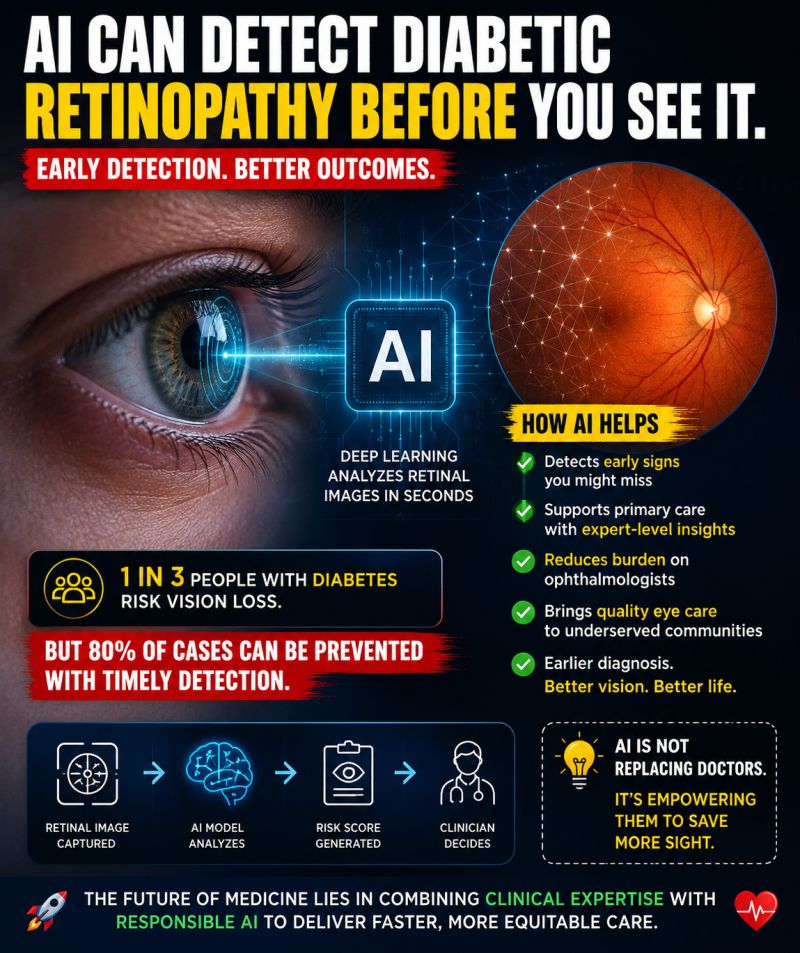
Deep learning algorithms trained on thousands of retinal fundus images can identify features suggestive of diabetic retinopathy within seconds. When integrated into primary care settings, these tools can help identify patients who need urgent ophthalmology referral, while allowing specialists to focus on cases requiring expert intervention.
The potential impact extends beyond technology:
🔹 Earlier detection and timely referral
🔹 Reduced burden on ophthalmologists and screening programs
🔹 Improved access to eye care in rural and underserved communities
🔹 More efficient use of healthcare resources without compromising clinical decision-making
AI is not a replacement for clinicians. Rather, it is a clinical decision-support tool that can enhance efficiency, expand access, and help bridge gaps in healthcare delivery when implemented responsibly and validated in real-world settings.
As healthcare continues to evolve, I believe the future lies in combining clinical expertise, evidence-based medicine, and responsible AI to deliver faster, more equitable, and patient-centered care.
What are your thoughts? Where do you see AI creating the greatest impact in everyday clinical practice?
𝗖𝗮𝗻 𝗔𝗜 𝗶𝗺𝗽𝗿𝗼𝘃𝗲 𝗱𝗶𝗮𝗯𝗲𝘁𝗶𝗰 𝗿𝗲𝘁𝗶𝗻𝗼𝗽𝗮𝘁𝗵𝘆 𝘀𝗰𝗿𝗲𝗲𝗻𝗶𝗻𝗴 𝗶𝗻 𝗽𝗿𝗶𝗺𝗮𝗿𝘆 𝗰𝗮𝗿𝗲?
By Dr. Anshul Thakur-Healthcare AI Specialist | Medical AI Consultant | AI Medical Writer | MBBS
•
August 09, 2026